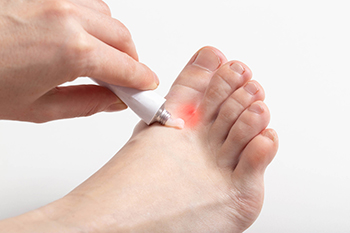
Athlete’s foot is a fungal infection that affects the skin on the feet. It may lead to itching, peeling, redness, and painful blisters. The infection often develops between the toes or along the sole of the foot where moisture becomes trapped. In some cases, fluid-filled blisters can form and cause burning, tenderness, or cracking of the skin that becomes uncomfortable while walking or wearing shoes. The affected skin may appear flaky, scaly, or white from excess moisture. Scratching can increase irritation or lead to secondary infection. Athlete’s foot spreads easily in warm, damp environments like locker rooms, swimming pools, and shared showers. Wearing sweaty socks or tight shoes for long periods of time may also increase the risk of infection. A podiatrist can diagnose the condition, determine the severity of the fungal infection, and recommend the most appropriate treatment. Care may include antifungal medication, drying treatments, and methods to prevent the infection from returning. If you have athlete’s foot symptoms, it is suggested that you schedule an appointment with a podiatrist for effective treatment solutions.
Athlete’s foot is an inconvenient condition that can be easily reduced with the proper treatment. If you have any concerns about your feet and ankles, contact Dr. John P. Beaupied from Palos Podiatry. Our doctor will treat your foot and ankle needs.
Athlete’s Foot: The Sole Story
Athlete's foot, also known as tinea pedis, can be an extremely contagious foot infection. It is commonly contracted in public changing areas and bathrooms, dormitory style living quarters, around locker rooms and public swimming pools, or anywhere your feet often come into contact with other people.
Solutions to Combat Athlete’s Foot
- Hydrate your feet by using lotion
- Exfoliate
- Buff off nails
- Use of anti-fungal products
- Examine your feet and visit your doctor if any suspicious blisters or cuts develop
Athlete’s foot can cause many irritating symptoms such as dry and flaking skin, itching, and redness. Some more severe symptoms can include bleeding and cracked skin, intense itching and burning, and even pain when walking. In the worst cases, Athlete’s foot can cause blistering as well. Speak to your podiatrist for a better understanding of the different causes of Athlete’s foot, as well as help in determining which treatment options are best for you.
If you have any questions please feel free to contact our office located in Palos Heights, IL . We offer the newest diagnostic and treatment technologies for all your foot and ankle needs.


