Items filtered by date: April 2026
Using Ultrasound to Evaluate Heel Pain in Active Patients
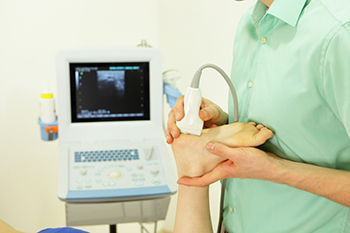
Heel pain in children and adults can come from different causes, including Sever’s disease, a growth-related condition in young athletes involving inflammation at the heel growth plate, and Achilles tendinitis, which involves irritation of the tendon at the back of the heel. Although symptoms may feel similar, the source of the problem is different, making accurate evaluation important. Ultrasound imaging offers a clear, real-time view of soft tissues, allowing providers to assess inflammation, tendon changes, and areas of stress without radiation. This helps guide more precise care by identifying whether the growth plate or the tendon is involved. Treatment may include activity modification, stretching, supportive footwear, or other targeted approaches based on the findings. Early and accurate identification can help prevent worsening symptoms and support a safe return to activity. If heel pain is limiting movement or performance, it is suggested that you see a podiatrist for a thorough evaluation, diagnosis, and treatment.
Many people suffer from bouts of heel pain. For more information, contact Dr. John P. Beaupied of Palos Podiatry. Our doctor can provide the care you need to keep you pain-free and on your feet.
Causes of Heel Pain
Heel pain is often associated with plantar fasciitis. The plantar fascia is a band of tissues that extends along the bottom of the foot. A rip or tear in this ligament can cause inflammation of the tissue.
Achilles tendonitis is another cause of heel pain. Inflammation of the Achilles tendon will cause pain from fractures and muscle tearing. Lack of flexibility is also another symptom.
Heel spurs are another cause of pain. When the tissues of the plantar fascia undergo a great deal of stress, it can lead to ligament separation from the heel bone, causing heel spurs.
Why Might Heel Pain Occur?
- Wearing ill-fitting shoes
- Wearing non-supportive shoes
- Weight change
- Excessive running
Treatments
Heel pain should be treated as soon as possible for immediate results. Keeping your feet in a stress-free environment will help. If you suffer from Achilles tendonitis or plantar fasciitis, applying ice will reduce the swelling. Stretching before an exercise like running will help the muscles. Using all these tips will help make heel pain a condition of the past.
If you have any questions, please feel free to contact our office located in Palos Heights, IL . We offer the newest diagnostic and treatment technologies for all your foot care needs.
Dealing With Foot Drop

Foot drop is a condition that makes it difficult to lift the front part of the foot while walking. This motion allows the toes to clear the ground with each step. When the muscles that perform this movement become weak or the nerves that control them are damaged, people may develop an abnormal walking pattern known as a steppage gait. This occurs when the knee is lifted higher than normal to prevent the toes from dragging, similar to marching. Foot drop can result from nerve compression near the knee, injuries to the lower back, or certain muscle or neurological disorders. Without proper care, the risk of tripping and falling may increase. A podiatrist can evaluate walking patterns, perform physical and neurological exams, order imaging tests, and provide bracing, custom orthotics, or rehabilitation guidance. If you have difficulty lifting the tip of the foot while walking, it is suggested that you make an appointment with a podiatrist for an exam, diagnosis, and treatment.
If you have any concerns about your feet, contact Dr. John P. Beaupied from Palos Podiatry. Our doctor can provide the care you need to keep you pain-free and on your feet.
Biomechanics in Podiatry
Podiatric biomechanics is a particular sector of specialty podiatry with licensed practitioners who are trained to diagnose and treat conditions affecting the foot, ankle and lower leg. Biomechanics deals with the forces that act against the body, causing an interference with the biological structures. It focuses on the movement of the ankle, the foot and the forces that interact with them.
A History of Biomechanics
- Biomechanics dates back to the BC era in Egypt where evidence of professional foot care has been recorded.
- In 1974, biomechanics gained a higher profile from the studies of Merton Root, who claimed that by changing or controlling the forces between the ankle and the foot, corrections or conditions could be implemented to gain strength and coordination in the area.
Modern technological improvements are based on past theories and therapeutic processes that provide a better understanding of podiatric concepts for biomechanics. Computers can provide accurate information about the forces and patterns of the feet and lower legs.
Understanding biomechanics of the feet can help improve and eliminate pain, stopping further stress to the foot.
If you have any questions please feel free to contact our office located in Palos Heights, IL . We offer the newest diagnostic and treatment technologies for all your foot and ankle needs.


